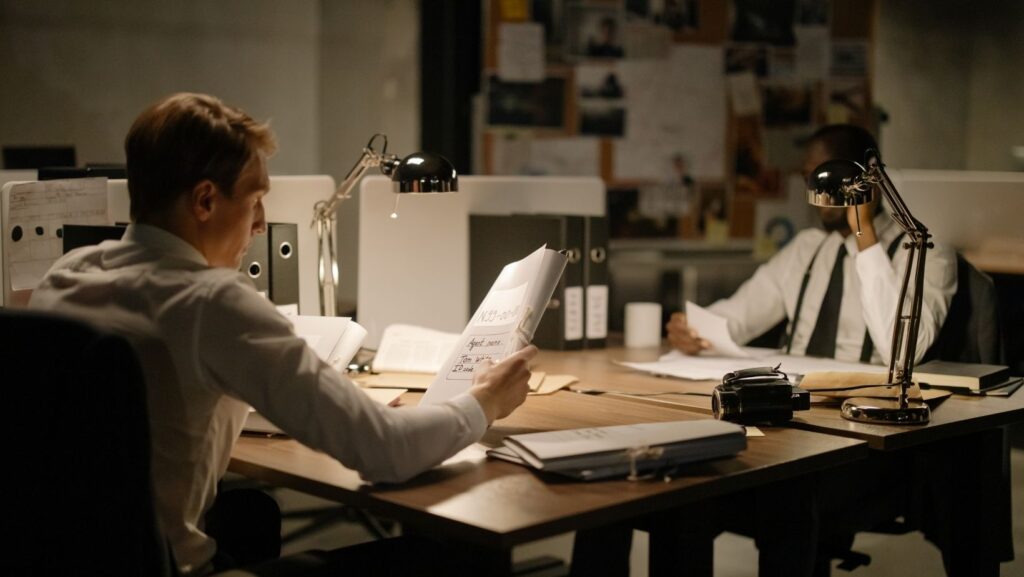
Evidence is only useful if it stands up to scrutiny. Whether it’s destined for a solicitor’s desk, an HR investigation, an insurance dispute, or a family court bundle, the same question always comes up: is it reliable, and can you prove it’s reliable? Professional investigators don’t “just find things out.” They build a defensible, documented path from observation to conclusion—one that anticipates challenge.
Below is a practical look at how experienced investigators gather evidence that’s credible, lawful, and persuasive.
Reliability Starts With Method, Not Instinct
Good investigators are naturally curious, but reliability comes from discipline. Before anyone follows a subject, pulls records, or conducts interviews, they define:
- The allegation or issue (what exactly needs proving or disproving?)
- The threshold of proof required (internal decision-making vs civil proceedings vs criminal referral)
- The risks and constraints (time, budget, safety, and—crucially—legality)
What “reliable evidence” actually looks like
Reliability isn’t a vibe; it has characteristics. In practice, solid evidence is:
- Verifiable: someone else can confirm how it was obtained and what it shows
- Contemporaneous: recorded at the time, not reconstructed from memory
- Complete: includes context that prevents misleading interpretation
- Accurate: correct dates, times, locations, and identifiers
- Lawfully obtained: gathered within the boundaries of relevant UK law and guidance
- Well-presented: organised so a third party can follow the logic without guesswork
That framework influences every decision that follows—from surveillance positioning to how digital data is handled.
Planning: Turning Questions Into Evidence Tasks
Professional investigations are built around a plan that resembles a project brief more than a movie plot. Investigators typically create an “evidence map,” linking each question to the most appropriate source.
For example, if the issue is suspected employment misconduct, the evidence plan might distinguish between:
- Opportunity (was the person where they claimed to be?)
- Behaviour (what were they doing?)
- Pattern (is this a one-off or repeated conduct?)
- Corroboration (what independent sources support the finding?)
Legal and ethical boundaries in the UK
UK investigators operate in a landscape shaped by privacy expectations and data protection. While the details depend on the case, experienced professionals keep a close eye on principles found in legislation and guidance such as the Data Protection Act 2018 / UK GDPR, the Human Rights Act, and rules around harassment and unlawful access to communications or accounts.
The point isn’t to make investigations timid; it’s to prevent “wins” that collapse later because the evidence was gathered improperly. A strong case can be undermined by a single illegal step.
Fieldwork: Surveillance That Captures Context (Not Just Clips)
Surveillance is one of the most misunderstood parts of investigative work. Done well, it’s not about “catching someone out” in a dramatic moment. It’s about documenting reality consistently, in a way that can be explained and defended.
Professional investigators focus on:
- Continuity: a clear timeline showing when observation started, pauses, and stops
- Identification: confirming it’s the correct person and vehicle, using multiple indicators
- Context: filming or photographing enough surrounding detail to avoid misinterpretation
- Contemporaneous notes: written logs that match the media files
A shaky 12-second clip rarely speaks for itself. A clear log paired with time-stamped media, location markers, and an explanation of vantage points is much harder to dispute.
Around the midpoint of many matters, clients also discover that “evidence” isn’t only what you collect—it’s how you collect it. That’s where working with trusted private detectives across the UK (or similarly qualified professionals) can make a material difference: trained investigators tend to think in terms of admissibility, proportionality, and documentation from day one, not as an afterthought when questions are raised.
Intelligence Sources: OSINT, Records, and Digital Traces
Not every case requires physical surveillance. Increasingly, investigators build reliable pictures using open-source intelligence (OSINT) and lawful record checks.
OSINT: powerful, but easy to get wrong
OSINT can include social platforms, business listings, court listings, mapping tools, archived pages, and public registers. The trap is assuming that because something is “online,” it’s true. Professional investigators cross-check OSINT against other sources and capture it properly—using screenshots with URLs, timestamps, and notes about how the content was accessed.
They also watch for common pitfalls:
- Misidentifying people with similar names
- Out-of-date posts that don’t reflect current behaviour
- Edited or staged content
- Information shared by third parties with unclear provenance
Digital evidence and chain of custody
When digital material matters—messages, images, documents, device data—chain of custody becomes critical. A professional approach typically includes:
- Recording where the data came from and who handled it
- Preserving original files (not just forwarded copies) when possible
- Avoiding actions that alter metadata
- Keeping structured audit trails so the evidence can be explained later
This is one reason experienced investigators are careful about taking “evidence” via screenshots sent in a hurry. It might still be useful, but it needs context, and it may need corroboration.
Interviews and Statements: Making Testimony Robust
Interviews are another area where reliability can rise or fall. Skilled investigators avoid leading questions and focus on eliciting detail that can be tested.
A credible witness account usually includes:
- Specifics (times, locations, sequences) rather than conclusions
- Admissions of uncertainty (“I can’t recall the exact day…”) rather than forced precision
- Clear separation between what was seen versus what was assumed
Professionals also document how statements were obtained—especially important if the account is later challenged as coerced, biased, or reconstructed. The goal isn’t to “build a story.” It’s to capture an account that survives scrutiny.
Reporting: The Difference Between Information and Evidence
Raw information becomes evidence when it’s organised, supported, and presented in a way that a third party can follow. Strong investigative reports tend to be:
- Chronological: what happened, in what order
- Sourced: each claim linked to an exhibit, log entry, or statement
- Balanced: including relevant facts that don’t support the initial suspicion
- Clear about limitations: what couldn’t be verified and why
That balance is important. Decision-makers trust reports that read like careful analysis, not advocacy.
What You Can Do to Improve Evidence Quality (Even Before You Instruct Anyone)
If you’re considering an investigation, a few steps can make outcomes stronger and more cost-effective:
First, define the decision you’re trying to make. Are you preparing for litigation, negotiating a settlement, or deciding whether a concern is real? Then preserve what you already have—don’t edit files, don’t re-save images, and keep original messages intact where possible. Finally, write down a timeline while it’s fresh. Even imperfect notes can help an investigator target the right dates, places, and sources.
Reliable evidence is rarely about a single dramatic discovery. It’s the product of methodical work—planned properly, gathered lawfully, documented carefully, and reported with clarity. That’s what turns suspicion into something you can actually act on.