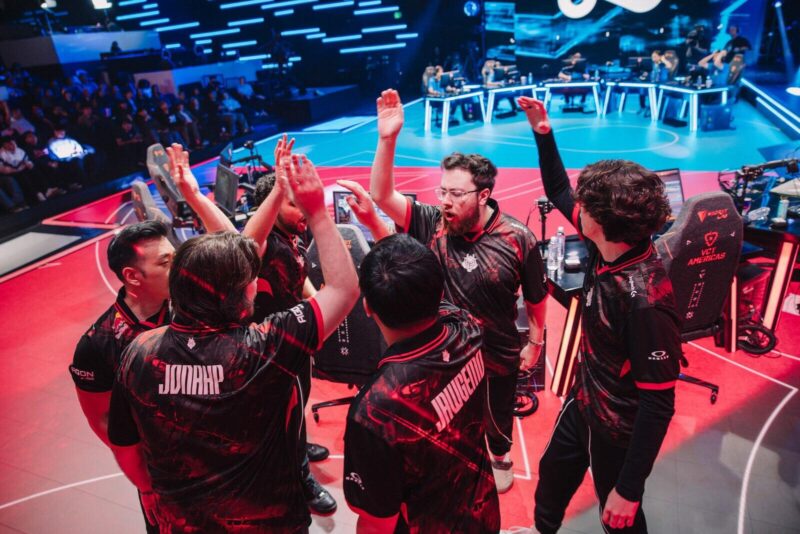
In today’s digital world, where physical borders are becoming increasingly transparent, humanity is searching for new ways to interact and build communities. What was perceived just a decade ago as a simple passion for video games has now evolved into a large-scale sociocultural phenomenon. Online tournaments have become not merely arenas for competition, but fully fledged digital spaces where millions of people find support, friendship, and a sense of belonging.
Digital Arenas as New Centers of Attraction
Traditional places of socialization—such as parks, cafés, or stadiums—are gradually being complemented by virtual hubs. Today, online tournaments perform the function of a “digital town square,” where people gather not only for the gameplay itself, but also for the shared atmosphere. It is a space where spectators and participants are united by common emotions, language, and goals. The rise of streaming platforms has allowed every fan to feel like part of a major event, regardless of whether they are in Kyiv, London, or Tokyo.
For example, when analyzing the latest Dota news, it becomes clear that the greatest attention is drawn not only to prize pool figures, but to stories of interaction between players and fans. Every major championship is accompanied by the creation of thousands of themed Reddit threads, Discord servers, and local chats, where discussions about strategies seamlessly evolve into exchanges of personal experiences. A tournament becomes a catalyst for building strong social networks that continue to exist long after the final match has ended. This creates a unique effect of “shared lived moments,” which is a fundamental human need as a social being.
Moreover, gaming universes offer a structure that is often lacking in real life. Tournament brackets, match schedules, and team practice sessions create a sense of order and belonging to something greater. For many young people, participation in such competitions becomes their first experience of responsibility toward a group, where every decision directly affects the collective result.
Teamwork and the Deepening of Interpersonal Bonds
One of the key reasons online competitions foster socialization is the need for deep coordination. Unlike individual sports, team-based disciplines require a high level of empathy and trust from participants. During tournament preparation, players spend hundreds of hours together in voice chat, learning not only the technical aspects of the game but also each other’s personalities.
By following current LoL news, fans can observe how professional teams build internal chemistry over the years. The same principle applies at the amateur level. When players face defeats, they learn how to support their teammates, provide constructive criticism, and find solutions to crisis situations. This type of interaction forms bonds that often prove stronger than “offline” acquaintances. In the virtual world, people frequently feel freer from social masks, allowing them to open up more quickly and build genuine relationships.
It is important to understand that an online tournament is a high-stress environment. And shared stress, as psychology shows, is one of the fastest ways to form a cohesive group. Players become “digital brothers-in-arms” who have gone through difficult qualifiers and intense finals together. This experience creates a shared cultural code understood only by those involved, further strengthening their connections.
Overcoming Social and Geographical Barriers
Online tournaments demonstrate an unprecedented level of inclusivity. In traditional sports, physical attributes, age, or health conditions can become insurmountable barriers to serious competition. The digital space neutralizes these limitations. Here, a person with a disability can be the captain of a successful team, while a teenager from a small town can compete on equal terms with residents of major cities.
This creates a unique platform for intercultural dialogue. Representatives of entirely different religions, political views, and social backgrounds can meet on the same virtual arena. A shared goal—winning the tournament—forces them to find common ground and set aside prejudice. In 2026, we can see how gaming communities are becoming tools of global integration, where people are valued for their skills, strategic thinking, and ability to work as part of a team, rather than for their appearance or origin.
Additionally, online tournaments often serve as a lifeline for people experiencing loneliness due to various circumstances—such as social anxiety or geographical isolation—that limit face-to-face interaction. The virtual world provides a safe environment for self-expression, where game mechanics act as an “icebreaker” that helps initiate communication.
Gamification of Communication and the Future of Socialization

Modern tournament platforms actively integrate social features, turning competition into a full-fledged game of life. Ranking systems, clan battles, shared quests, and digital rewards encourage continuous interaction. This creates an effect of constant connection: even after a tournament ends, players remain within the same ecosystem, discussing patches, new characters, and future plans.
This process can be described as the “gamification of friendship.” People receive dopamine reinforcement not only from winning, but also from social recognition within their group. Being part of a well-known clan or having a high reputation within a gaming community becomes as prestigious as achieving success in a real-world career. This gives rise to new forms of leadership: team captains often possess management and psychological skills that rival those of executives in large corporations.
Moreover, online tournaments stimulate the development of related forms of content—fan art, analytical videos, cosplay, and podcasts. This expands communication beyond players themselves, engaging creative individuals who find their niche within this ecosystem. As a result, the tournament becomes a core around which a vast creative community revolves, constantly generating new opportunities for connection and collaboration.
Conclusion
Online tournaments have long ceased to be merely tests of reaction speed. They have transformed into complex social networks of a new generation, where competition is only the form, and human connection is the true substance. Through shared emotions, teamwork, and the overcoming of barriers, these digital events help people combat alienation in an era of global digitalization.
Today, winning an online match is not just a statistic—it is a step toward new friends and like-minded people. In a world where we are increasingly physically separated, virtual arenas become the bridges that allow us to feel part of a greater whole. It can be said with confidence that the role of online tournaments as social glue will only grow stronger in the future, shaping new standards for how we interact and build communities.